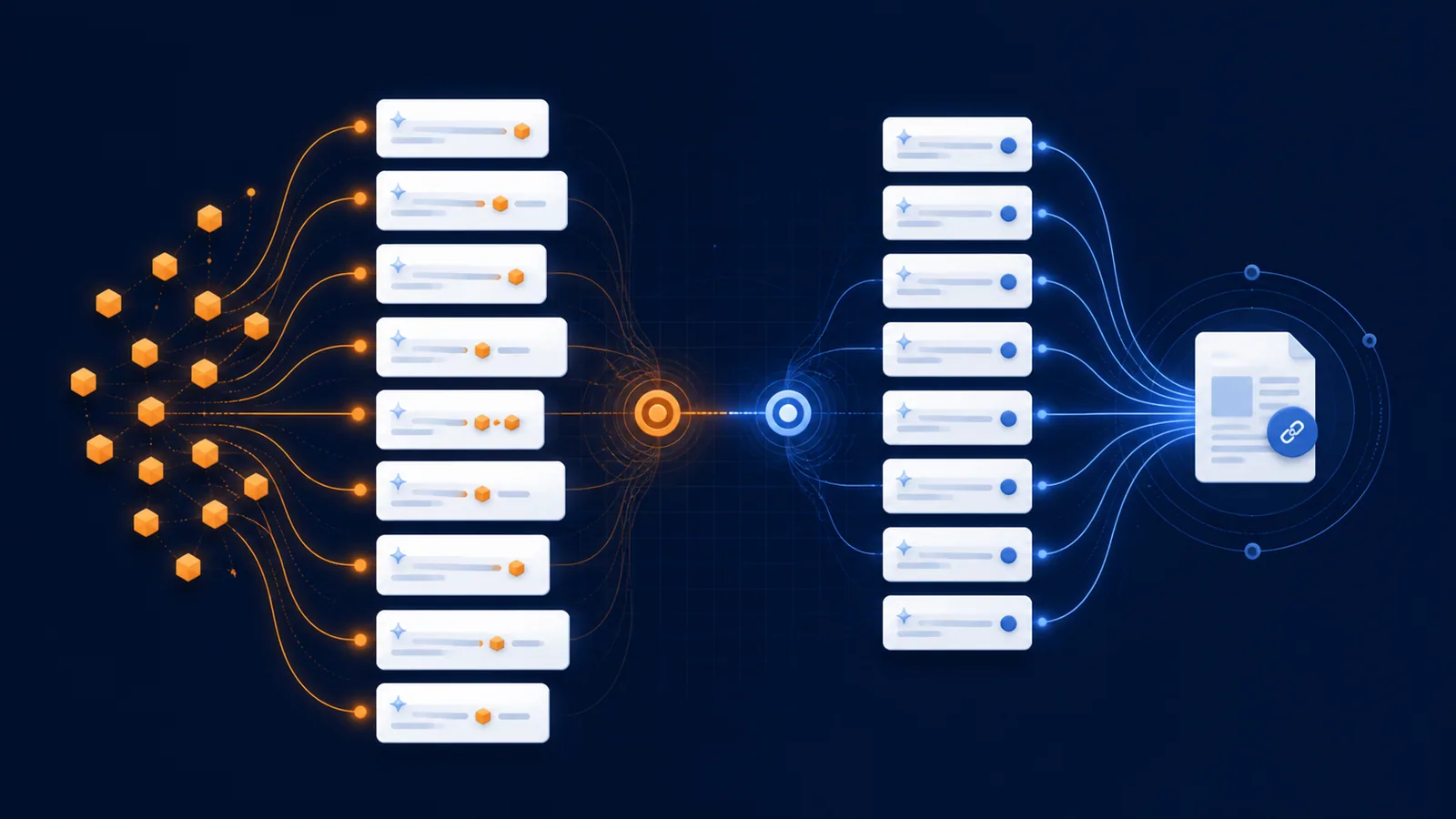
AI visibility becomes useful when a team can inspect the answer behind a metric and understand what changed. This guide turns that principle into a practical operating approach.
KEY TAKEAWAYS
The short version
- Start with buyer questions, not a vanity list of brand prompts.
- Store the raw answer behind every metric.
- Separate provider availability from actual brand performance.
- Review changes as a time series instead of isolated screenshots.
What AI visibility actually measures
AI visibility is the observable presence of a brand inside answers generated by AI assistants and answer engines. It includes whether the brand appears, how prominently it appears, which competitors are preferred, and which sources support the answer.
That makes AI visibility broader than a rank position. The same buyer question can produce a direct recommendation, a passing mention, a citation without a mention, or no brand presence at all. A useful monitoring system preserves those differences instead of compressing them into one unexplained score.
Build the measurement layer in the right order
Begin with a curated prompt set mapped to real buyer intent. Group prompts by audience, market, journey stage and commercial importance. Then run the same monitored question on a repeatable schedule across each supported provider.
For every run, retain the provider, model or experience, timestamp, raw response, brand mentions, competitor mentions and cited URLs. Derived metrics should always link back to this evidence.
- Prompt coverage: the questions that matter to the business.
- Provider coverage: where each question is actually monitored.
- Response evidence: the stored answer behind the result.
- Derived analysis: mentions, citations, share of voice and change.
Avoid the three most common measurement traps
First, do not treat a single answer as a stable ranking. Generative answers vary, so direction over repeated runs matters more than one favorable response. Second, do not mix unavailable provider data with a zero score. Missing coverage and poor performance are different states.
Third, do not report a percentage without its denominator. A 60% mention rate could mean three mentions across five carefully selected prompts or 600 mentions across a thousand broad prompts. The decision quality is very different.
Turn monitoring into an operating rhythm
A biweekly review is frequent enough to catch meaningful movement while leaving time for content, authority and technical changes to take effect. Focus the review on new wins, meaningful losses, competitor movement, changed citations and prompts that flipped outcome.
The goal is not to manufacture more charts. It is to create a traceable loop from buyer question to AI answer, from answer to evidence, and from evidence to the next action.