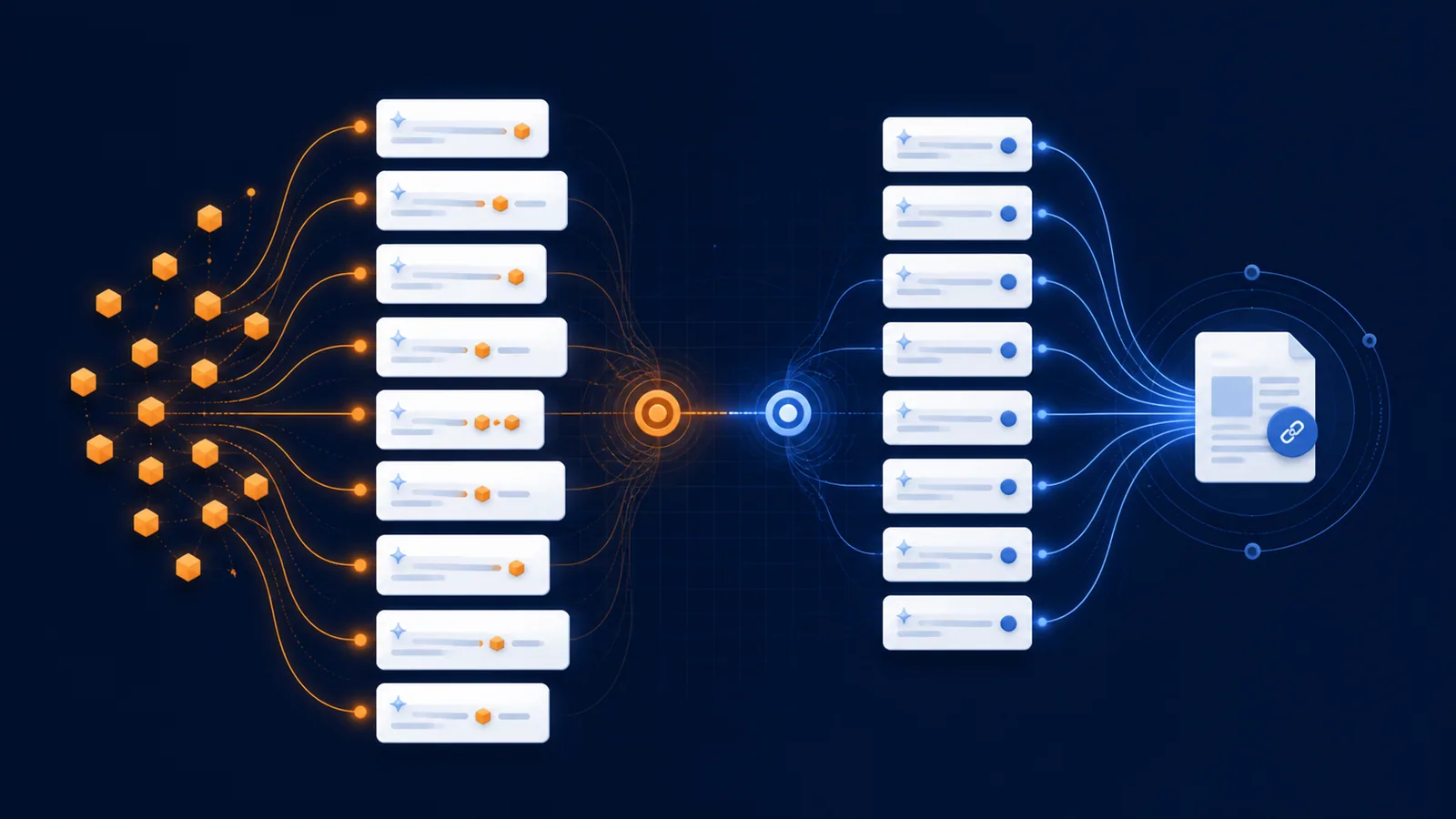
AI visibility becomes useful when a team can inspect the answer behind a metric and understand what changed. This guide turns that principle into a practical operating approach.
KEY TAKEAWAYS
The short version
- Treat citations and search performance as related signals, not proof of causation.
- Compare pages at the same grain and time window.
- Prioritize pages that combine authority potential with commercial relevance.
- Keep the source URL behind every reported citation.
Two datasets answer different questions
Citation monitoring answers: which pages are being used as evidence inside AI-generated responses? Search Console answers: how are selected properties and pages appearing in Google Search through clicks, impressions, click-through rate and average position?
Neither dataset explains the other on its own. But when joined carefully, they help a team identify pages that are visible in search, trusted by answer engines, or unexpectedly strong in one channel and weak in the other.
Join at page and time-window level
Normalize URLs before matching them. Canonicals, query parameters, trailing slashes and protocol differences can split one page into multiple records. Compare equivalent reporting windows and preserve the provider, prompt and raw response behind every citation.
Use Search Console dimensions such as page, query, country, device and date only when they support the decision. More dimensions create more rows, not automatically more insight.
Look for actionable patterns
These patterns are prioritization inputs, not causal conclusions. A citation does not prove that it caused a search change, and a ranking change does not prove that an AI system will cite the page.
- High citations, strong search: protect and refresh an established authority page.
- High citations, weak search: investigate technical visibility and search-intent alignment.
- Low citations, strong search: improve quotable evidence, structure and topical completeness.
- Competitor citations: study the specific source type and evidence the answer engine selected.
Report the evidence, not a mysterious score
A useful report lets the reader move from a chart to the page, prompt, provider and answer that produced it. This makes the analysis auditable and keeps the team focused on changes it can verify.